
Use case · Product Configurators
BIM Model Version Comparison & Change Tracking Platform
A new Revit version lands, and someone has to answer one question: what changed? We built a web platform that answers it in minutes: visually, completely, and without anyone opening Revit.
The challenge
Every model update raised the same question. Nobody could answer it fast.
Each uploaded Revit version carried changes: some announced, most not. Finding them meant hours of side-by-side inspection by someone senior enough to spot them, and the findings still travelled by email. Stakeholders without Revit had to take engineering's word for what moved. Decisions waited on all of it.
What made it hard
What the platform had to pull off
The solution
A platform that watches the model so nobody has to
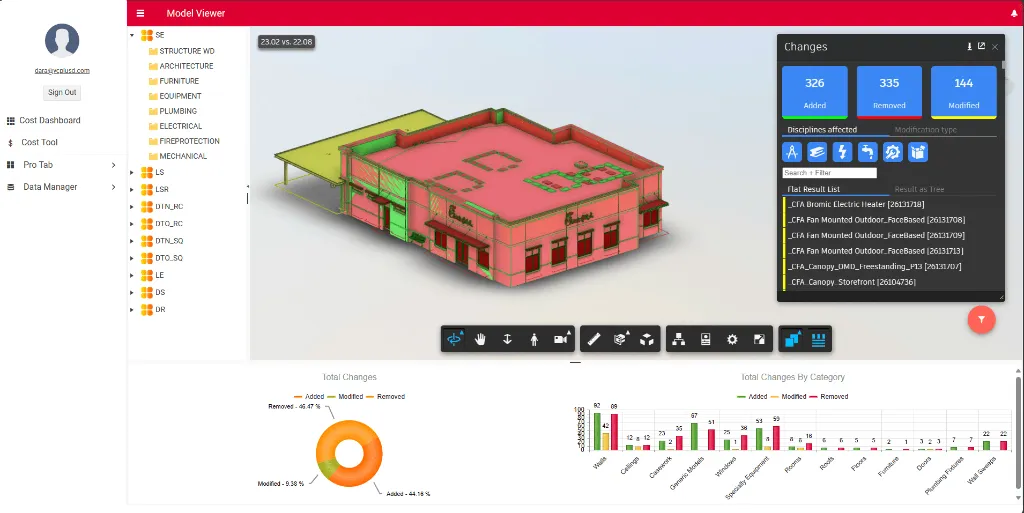
FDES built a web-based platform on Autodesk Platform Services that notices every model update on its own, runs the comparison automatically, and puts the result in a 3D viewer anyone on the project can read.
- APS webhooks flag every new version the moment it arrives.
- Model data is extracted and compared programmatically, element by element, not by eye.
- Added, modified, and removed components light up in the 3D viewer.
- Dashboards and reports translate the diff for every stakeholder, Revit user or not.
- Role-based access keeps the collaboration secure and auditable.
Delivered scope
What the platform now handles
Technologies used
Measured outcome
What changed for the team
Per comparison
Change tracking that consumed 4-6 hours per model comparison now finishes in under 15 minutes.
Faster review decisions
Automated visual diff reports move design review decisions 5x faster; the evidence is already on screen.
Change record
A single source of truth for design changes. Email-based change tracking is gone entirely.
Of changes, visible
100% visibility into model changes across the project lifecycle. Nothing slips through untracked.
The difference
One version update, both ways
Related
More systems like this one
This platform is one build from our BIM automation practice: Revit API add-ins, Dynamo workflows, and APS cloud automation.
Next step
What Does Your Team Still Check by Eye?
If model complexity, version churn, or visibility gaps are eating your review time, the comparison can run itself. Tell us what your team inspects manually; we'll design the platform that inspects it instead.
- 4–6 hours per comparison down to under 15 minutes
- Design review decisions made 5x faster
- Every change detected and categorized automatically
- 100% visibility across the project lifecycle