Custom CAD & engineering automation · since 2007
Days of repetitive CAD work, run in minutes.
Turn product specifications into CAD models, drawings, BOMs, calculations, and quotes, without repeating the same engineering work for every order.
FDES builds custom automation around your products, your standards, and the CAD tools you already run: AutoCAD, Inventor, and SOLIDWORKS.
- Product dimensions
- Material and options
- Customer requirements
- Your calculations
- Your standards and checks
- Your drawing templates







The difference
Same engineering knowledge.
A very different working day.
Each new order brings familiar calculations, drawings, and checks. Automation turns that repeated effort into a controlled process.
| When a new variant arrives | Manual engineering | With FDES automation |
|---|---|---|
| Drawing turnaround | Days spent adapting each drawing set | Minutes to hours, depending on the workflow |
| Error checking | Mistakes found during review, or on the shop floor | Rules and checks applied before release |
| Output consistency | Depends on individual drafting practices | The same templates and standards, every run |
| Your engineers' time | Recreate, recalculate, and coordinate | Review the output and handle exceptions |
What we automate
Five ways to take repetition
out of engineering.
Choose the bottleneck you want to solve. We build the logic and tools that turn your inputs into finished outputs.
Variant drawing automation
Generate consistent drawings for every size and configuration from one master template, compliant with your standards.
Engineering calculations
Apply your calculation methods and produce traceable reports straight from engineering inputs, with no fragile spreadsheets.
Product configurators (CPQ)
Connect sales configuration to pricing, drawings, BOMs and manufacturing documents without repeating the engineering.
CAD customization
Add commands, panels, and tools directly inside AutoCAD, Inventor or SOLIDWORKS using their official APIs.
Autodesk Platform Services
Run design automation, model processing, and BIM workflows in the cloud, beyond individual workstations.
Interactive · 20 seconds
What is repetitive CAD work costing you?
Drag the sliders. The numbers are conservative; they assume automation removes 80% of the repetitive load, which is typical of our production deployments.
Estimate: hours × 46 working weeks × 80% automatable share. Your audit maps the real figure per workflow.
Engineering foundation
Built for real engineering work.
Rule-driven logic
Your engineering rules, checks, and standards are encoded into the tools and applied consistently, not remembered manually.
Native CAD APIs
Official SDKs only. No screen-scraping, no brittle macros: tools that feel like part of the CAD platform and survive version upgrades.
Production-safe architecture
Multi-user, multi-machine, maintainable as requirements evolve. No fragile one-off scripts.
Designed for variants & change
Product variants, configuration rules, and evolving standards are the design center; the system improves over time instead of breaking.
ERP / PDM / PLM integration
BOMs push directly to SAP, NetSuite, Odoo, or Dynamics. The CAD island connects to the rest of your business.
Code you own
Documented, version-controlled, transferable. Maintain and extend it long-term, with no vendor lock-in.
Outcomes reported by FDES
More output.
Less repeated effort.
Results from production deployments show what becomes possible when engineering rules are applied consistently.
Shorter cycle times
Routine variants move from weeks to hours.
Drafting errors
Rule-based validation replaces manual coordination.
Standards compliance
Outputs follow the configured CAD and engineering standards.
Capacity gained
More throughput without adding headcount.
Reported production outcomes. Results vary by workflow complexity and scope; these are not guarantees for every project.
Shipped systems
Real systems,
running in production.
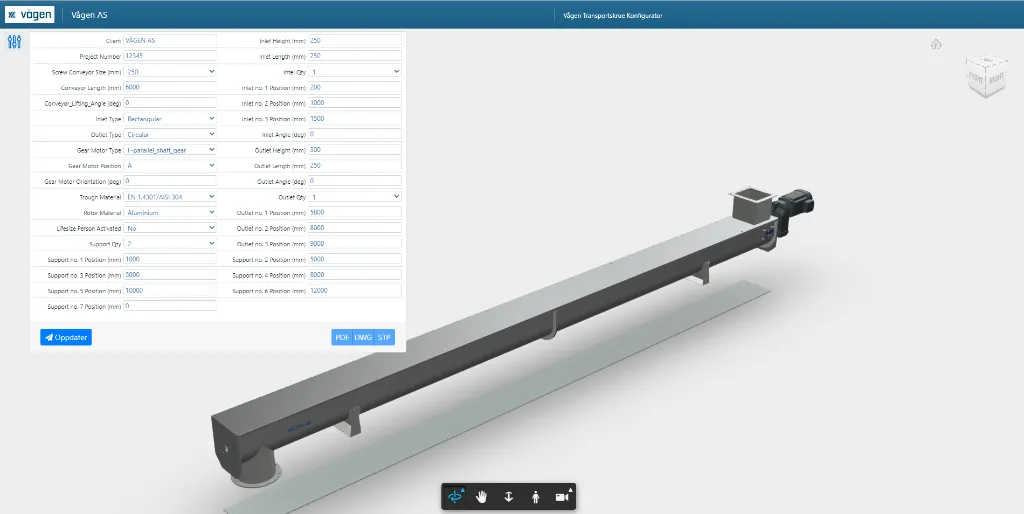
Web-based screw conveyor configurator
Sales teams configure, price, and generate manufacturing outputs, without touching CAD or pulling in engineering.
Read the use case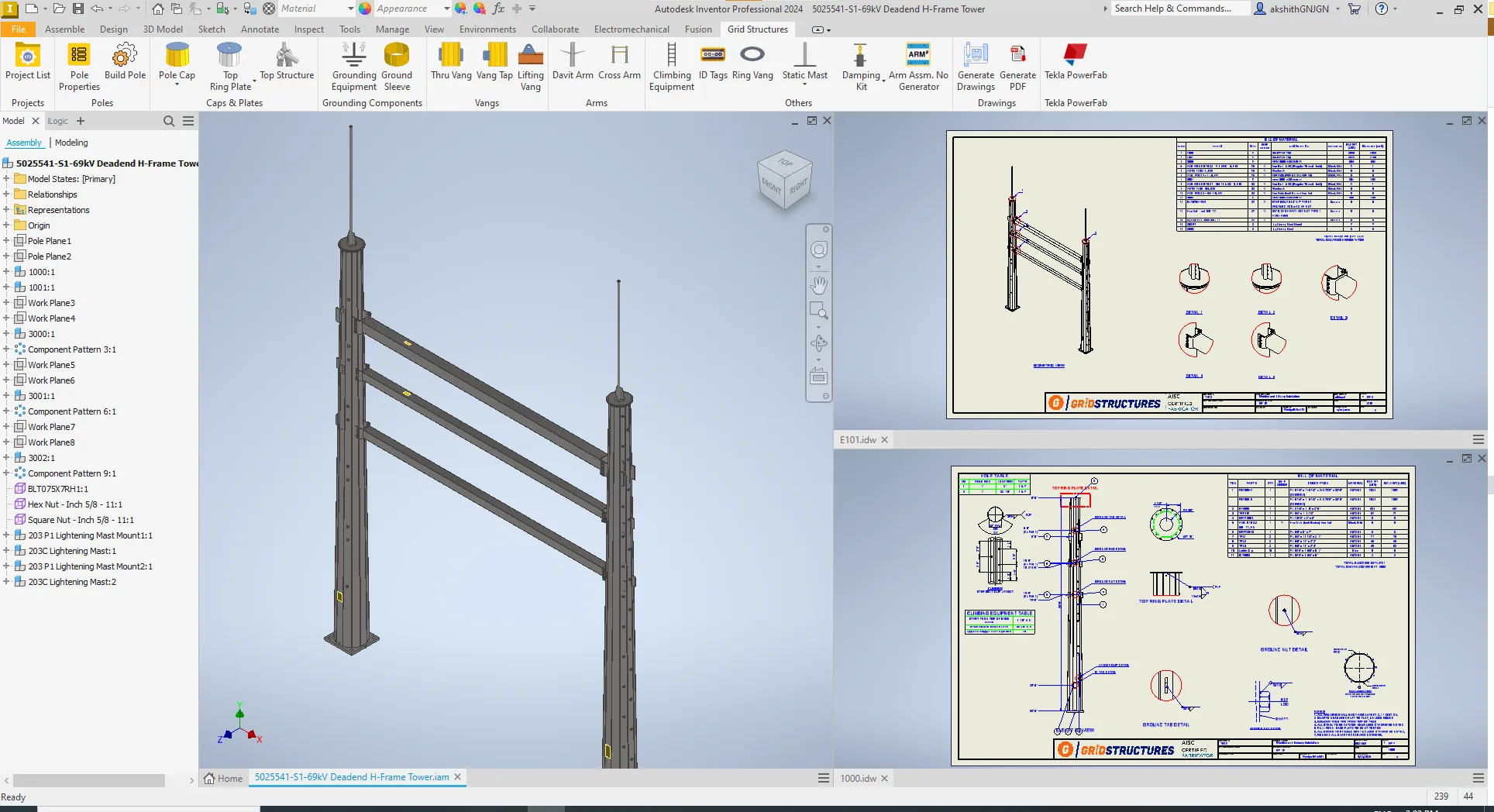
Transmission pole design automation
Inventor models, fabrication drawings, and BOMs generated straight from PLS-Pole engineering output.
See the solution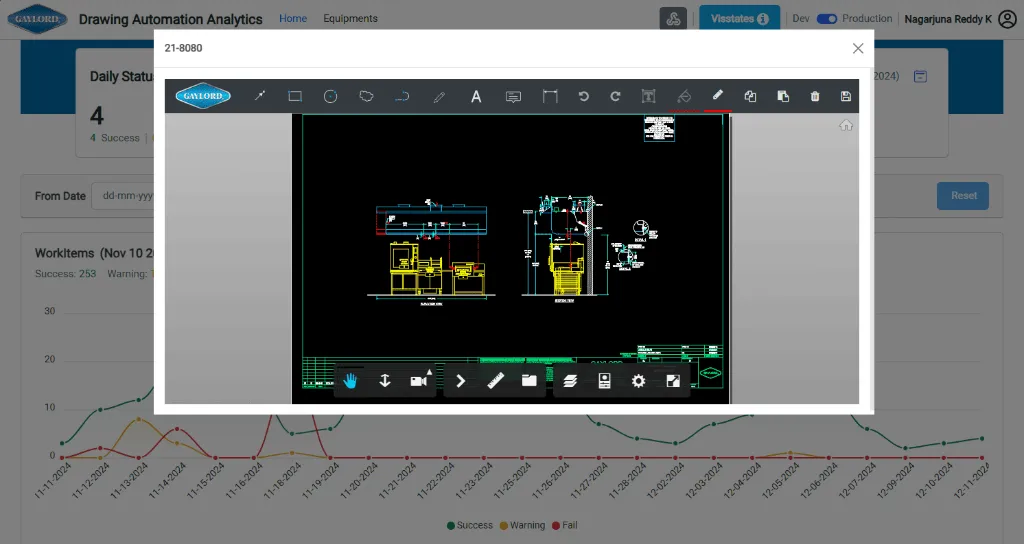
Commercial kitchen drawing automation
Every kitchen equipment order generates its complete variant drawing package automatically.
Read the use caseHow we deliver
From the way you work
to a system that works.
Workflow discovery
We map your process and where the hours actually go.
Rule modeling
Your engineering logic, captured explicitly before any code.
Prototype
A quick win on one product family, typically 3 to 6 weeks.
Production build
Robust automation, integrated with your CAD and ERP systems.
Rollout & support
Documentation, training, and a codebase your team owns.
Where it works
Different industries.
Your rules are the starting point.
If your products have variants and repeatable engineering logic, there is a strong fit for automation.
Your tools, connected
Automation where
your engineers already work.
Inventor
iLogic · add-ins · Inventor API
Explore automationAutoCAD
.NET plugins · AutoLISP · AcCoreConsole
Explore automationSOLIDWORKS
API · macros · DriveWorks
Explore automationRevit & BIM
Revit API · Dynamo · APS
Explore automationAlso working withSolid EdgeAutodesk Platform Services ANSYS / APDL
Why FDES exists
Founded by an engineer,
not a businessman.
"I saw engineers wasting hours on repetitive tasks. I knew code could solve it, but generic IT firms didn't understand the engineering. So I built FDES."
Kora Nagarjuna ReddyFounder & Managing Director
Our first major win was automating railway signaling circuits, a task considered too complex to automate at the time. That set our DNA: if the logic exists, it can be engineered into a system.
Our design automation work has been featured in a Dassault SOLIDWORKS case study.
Meet FDESFrom the resource library
Make your next decision
an informed one.
Free automation audit · no obligation
Show us the work
you keep repeating.
We'll identify where automation can have the greatest impact on your engineering workflow, without disrupting how your team works today.
Request your free automation auditOr email sales@fdestech.com
What you'll receive
- A review of your CAD and Excel-driven engineering processes
- Automation-ready workflows, identified and ranked
- Time and error-reduction opportunities, quantified
- A clear automation roadmap for your products